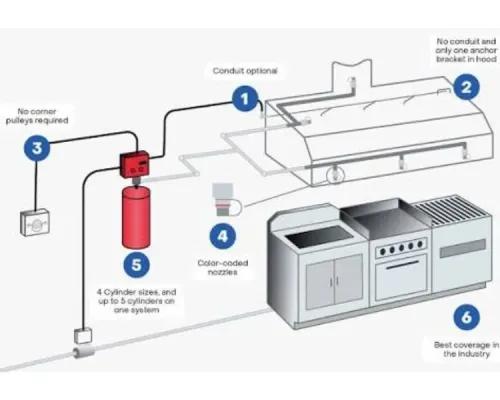
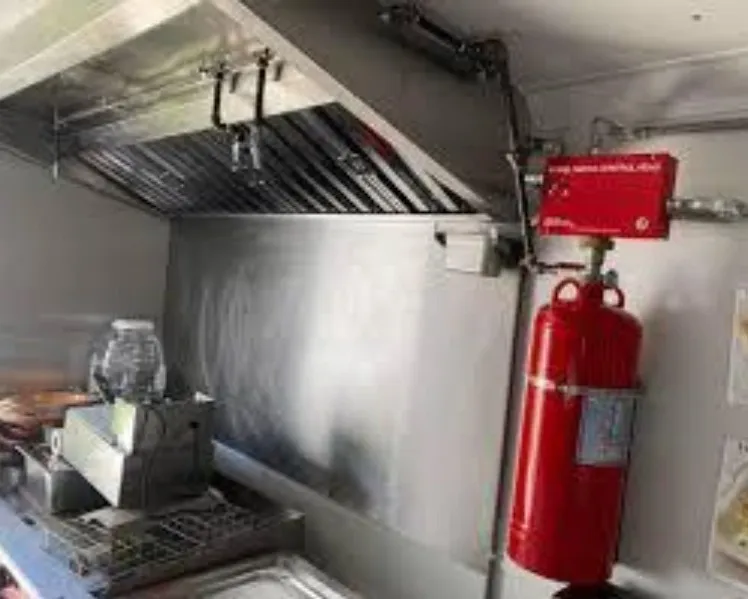
A food truck fire suppression system is a compact, automatic fire protection solution specifically engineered to mitigate high-risk cooking hazards associated with mobile kitchens, particularly those involving grease-laden vapors, open flames, and pressurized fuel sources such as LPG cylinders. These systems typically employ a wet chemical extinguishing agent compliant with Class K fire standards, designed to rapidly suppress fires through a combination of flame knockdown, cooling, and saponification of burning oils and fats. The system architecture includes strategically located discharge nozzles installed within the cooking hood, ductwork, and over critical appliances such as fryers, griddles, and burners. Activation can occur automatically via fusible links that melt at predetermined temperatures or manually through a pull station, triggering the release of the extinguishing agent from a pressurized storage cylinder. Simultaneously, the system initiates fuel shut-off valves and electrical interlocks to isolate ignition sources, thereby preventing reflash. Given the spatial constraints of food trucks, the system is designed for minimal footprint while ensuring full coverage and compliance with standards such as NFPA 17A and NFPA 96. Routine inspection, maintenance, and recharge protocols are critical to ensure operational reliability, particularly due to vibration, movement, and environmental exposure inherent in mobile operations.
Keywords