Gemini said
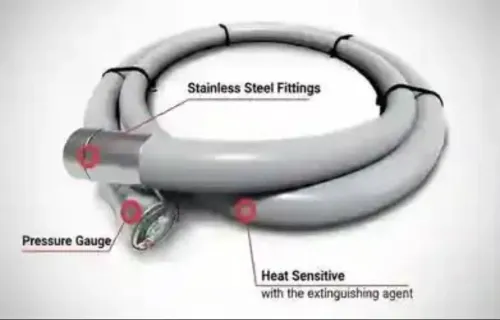
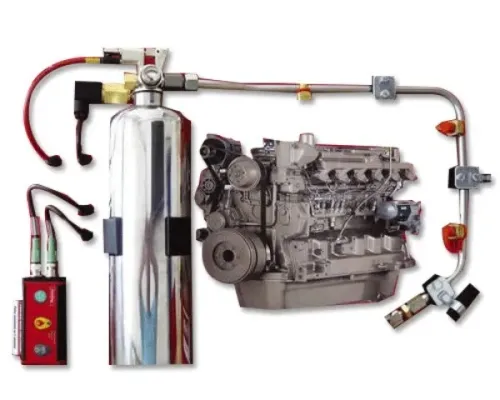
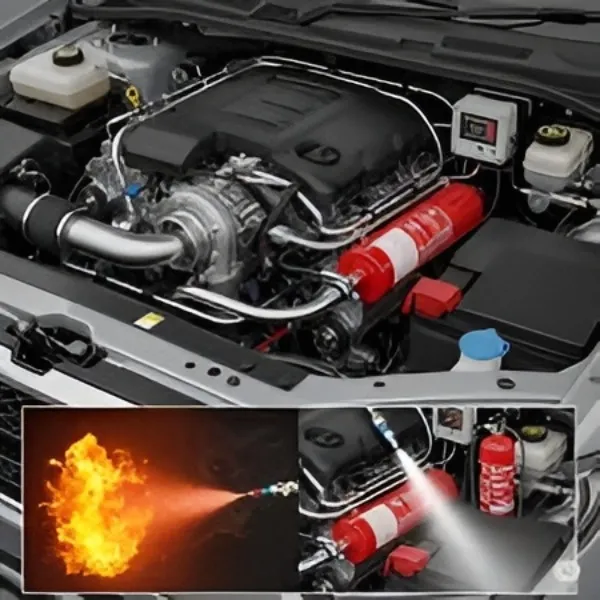
A vehicle engine fire suppression system is a specialized safety assembly designed to detect and extinguish thermal events within the high-risk environment of an engine compartment. These systems typically utilize a combination of linear thermal detection tubing or electrical heat sensors that monitor for specific temperature thresholds. Upon activation, either through the melting of the detection tube or an electronic trigger, a pressurized suppressant agent—such as dry chemical powder, foam, or gaseous agents like Novec 1230—is discharged through a network of strategically placed nozzles. These nozzles are aimed at high-risk 'hot spots' like the turbocharger, manifold, and fuel lines to ensure total flooding of the compartment.The mechanical operation relies on a cylinder containing the extinguishing agent, which is kept under constant pressure. In many modern systems, the detection tubing itself acts as the storage vessel for the pressure; when a flame touches the tube, it bursts at the point of highest heat, creating a nozzle that delivers the agent directly to the source of the fire (a Direct Release System). Alternatively, an Indirect Release System uses the detection tube as a trigger to open a valve on the main cylinder, discharging the agent through fixed stainless steel or copper distribution lines. This rapid intervention is critical because engine fires often involve pressurized flammable fluids, where every second saved prevents the fire from breaching the firewall and entering the passenger cabin.
A vehicle engine fire suppression system is a specialized safety assembly designed to detect and extinguish thermal events within the high-risk environment of an engine compartment. These systems typically utilize a combination of linear thermal detection tubing or electrical heat sensors that monitor for specific temperature thresholds. Upon activation, either through the melting of the detection tube or an electronic trigger, a pressurized suppressant agent—such as dry chemical powder, foam, or gaseous agents like Novec 1230—is discharged through a network of strategically placed nozzles. These nozzles are aimed at high-risk 'hot spots' like the turbocharger, manifold, and fuel lines to ensure total flooding of the compartment.The mechanical operation relies on a cylinder containing the extinguishing agent, which is kept under constant pressure. In many modern systems, the detection tubing itself acts as the storage vessel for the pressure; when a flame touches the tube, it bursts at the point of highest heat, creating a nozzle that delivers the agent directly to the source of the fire (a Direct Release System). Alternatively, an Indirect Release System uses the detection tube as a trigger to open a valve on the main cylinder, discharging the agent through fixed stainless steel or copper distribution lines. This rapid intervention is critical because engine fires often involve pressurized flammable fluids, where every second saved prevents the fire from breaching the firewall and entering the passenger cabin.
Keywords