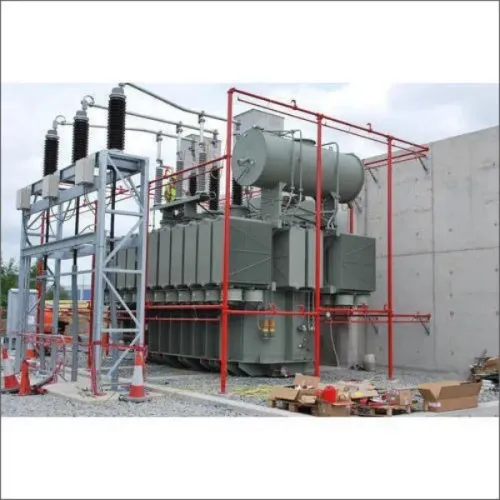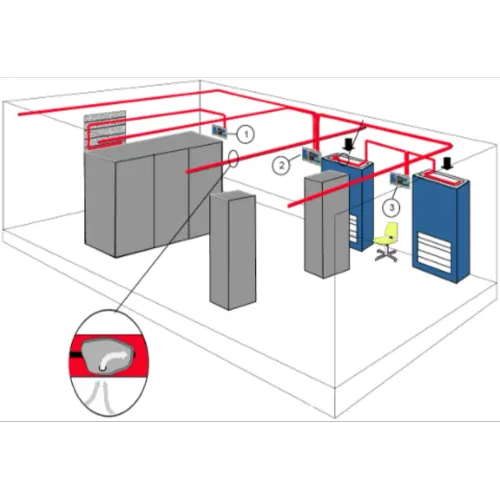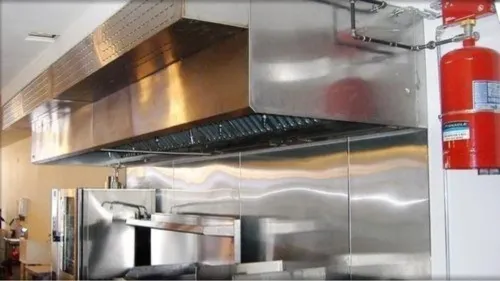
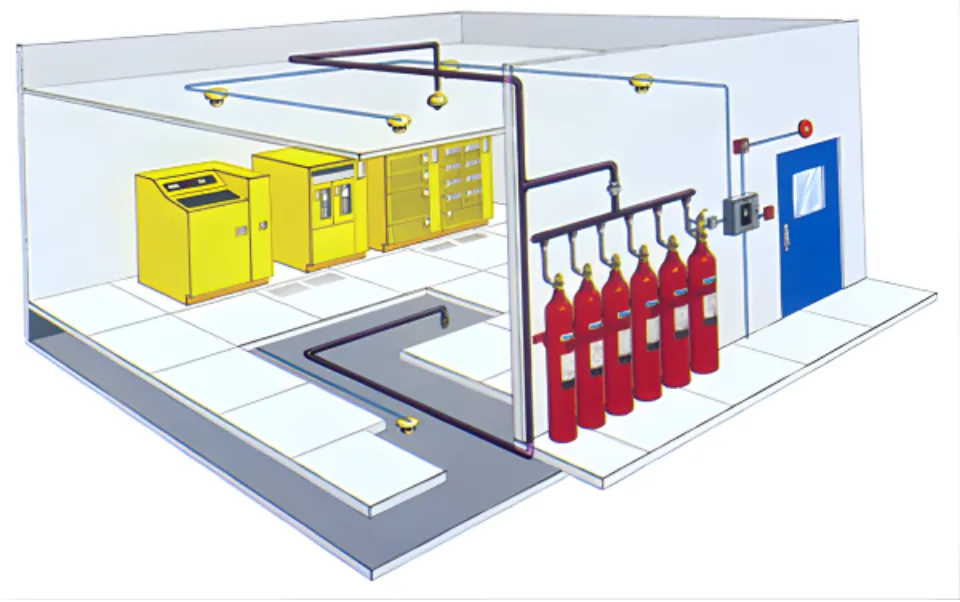
A 'carbon dioxide (CO₂) fire flooding system' is a fixed fire suppression system designed to extinguish fires by reducing the oxygen concentration in an enclosed or semi-enclosed space to a level that cannot support combustion. The system stores CO₂ in high-pressure cylinders or low-pressure refrigerated tanks and is activated either automatically through heat, smoke, or flame detection or manually via release stations. Upon activation, the CO₂ is rapidly discharged through a network of pipes and nozzles, distributing the gas uniformly throughout the protected area. This creates a “total flooding” condition, where the oxygen level is typically reduced below 15%, effectively suppressing the fire without leaving any residue. The system includes key components such as control panels, pilot cylinders, discharge valves, time delays, alarms, and safety interlocks to ensure proper operation and personnel evacuation before release. CO₂ flooding systems are commonly used in areas with sensitive equipment, such as electrical rooms, engine rooms, and data centers, because CO₂ is non-conductive and does not damage equipment. However, due to the risk of asphyxiation, strict safety measures, warning systems, and compliance with standards like National Fire Protection Association (e.g., NFPA 12) are essential for safe design and operation.
Keywords