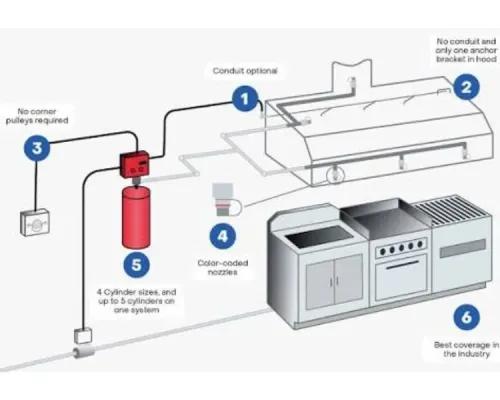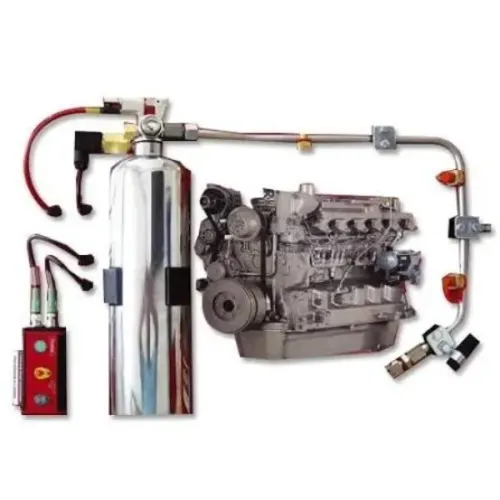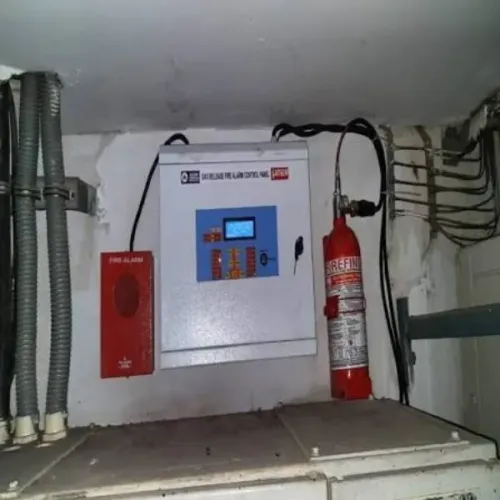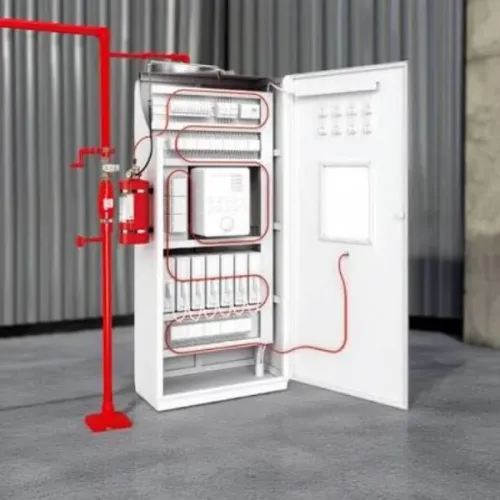
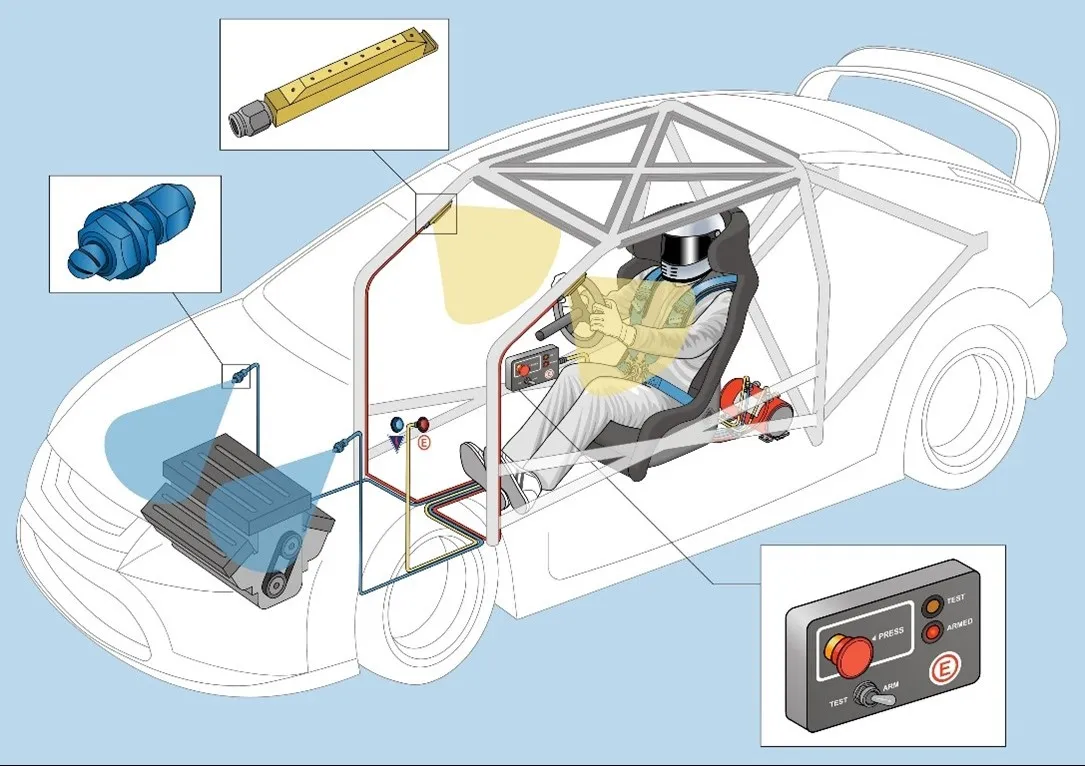
An automatic fire suppression system in a race car is a critical safety subsystem designed to detect and extinguish fires rapidly, minimizing risk to the driver and preventing catastrophic damage. Typically integrated into high-performance motorsport vehicles governed by organizations such as the Fédération Internationale de l'Automobile, the system consists of a pressurized cylinder filled with a fire-extinguishing agent (commonly foam, gas, or clean agents like Novec 1230), a network of strategically placed nozzles, heat-sensitive or electrically triggered activation mechanisms, and control circuitry. When a fire is detected—either automatically through thermal sensors or manually via a driver-activated switch—the system releases the extinguishing agent through nozzles directed at high-risk areas such as the engine bay, fuel tank, and cockpit. The agent works by cooling the fire, displacing oxygen, or interrupting the chemical reaction of combustion. These systems are engineered to operate effectively under extreme conditions, including high speeds, vibrations, and impacts, ensuring rapid discharge within seconds. Additionally, modern systems are lightweight, compact, and compliant with strict motorsport safety regulations, making them an essential component in protecting both driver and vehicle during racing incidents.
Keywords